
What Is a Flexible Duct Connector?
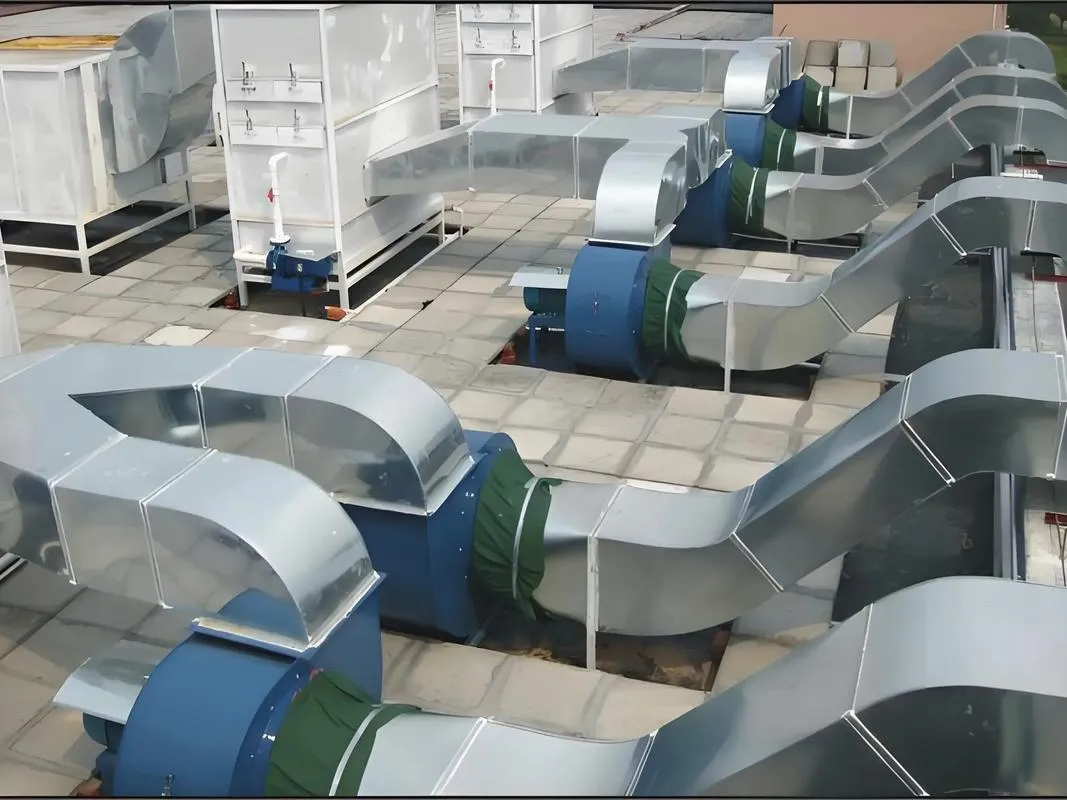
A flexible duct connector, also known as a duct soft joint or vibration isolation duct connector, is a flexible transitional connecting component for HVAC duct systems. It is composed of high-strength flexible fabric, PVC or fire-resistant polymer material, with double-sided sealing and edge reinforcement structure. Installed between metal ducts, ventilation fans, air handling units, and duct terminals, it acts as a flexible buffer section for the ventilation system.
Different from rigid pipe connections, flexible duct connectors can tolerate pipeline displacement, angle deviation, and equipment vibration. They effectively isolate vibration transmission, compensate for installation errors, and prevent air leakage at duct joints, solving many common quality problems in traditional rigid duct engineering.
Core Features & Engineering Advantages
-
Professional Vibration Isolation & Noise Reduction Fans and air conditioning units will produce continuous vibration during operation. Rigid connections directly transmit vibration to the entire ductwork, causing duct resonance and indoor humming noise. Flexible duct connectors cut off vibration transmission paths, buffer equipment oscillation, and eliminate duct resonance noise, creating a quieter ventilation environment.
-
Perfect Installation Error Compensation On-site construction often results in dimensional errors, height deviation, and butt joint misalignment between ducts. The flexible scalable structure of duct connectors can effectively compensate for installation deviations, avoid forced hard connection of rigid ducts, and reduce construction rework rate.
-
Excellent Air Tightness & Energy Saving Traditional metal flange joints are prone to loose sealing and air leakage after long-term operation. Flexible duct connectors fit tightly with ducts and equipment, effectively preventing cold and hot air leakage, stabilizing system air volume and wind pressure, and reducing HVAC long-term energy consumption.
-
Fire Retardant & High Safety Performance Industrial and commercial grade flexible duct connectors adopt flame-retardant and fire-resistant materials, which comply with international building fire codes. They feature self-extinguishing performance, effectively preventing flame spread through duct pipelines and improving the overall fire safety of ventilation systems.
-
Anti-Aging & Long Service Life High-quality polymer and fabric composite materials have excellent tensile resistance, oxidation resistance, and moisture corrosion resistance. They adapt to long-term operation in high-temperature, humid, and frequent vibration environments, not easy to crack or deform, reducing later maintenance costs.
-
Relieve Structural Stress & Protect Duct System Building settlement, thermal expansion and contraction will cause structural stress on rigid ducts. Flexible connectors buffer duct deformation stress, avoid pipeline cracking, flange damage and air leakage failure, and protect the integrity of the entire duct system.
-
Lightweight & High Construction Efficiency Easy to cut, fold and install without complex fixing tools. It simplifies duct connection procedures, shortens project construction cycles, and greatly saves labor and installation costs for HVAC engineering.
Main HVAC & Industrial Application Scenarios
Flexible duct connectors are standard matching accessories for all kinds of air supply, exhaust and smoke exhaust duct systems, widely used in commercial, civil and industrial HVAC projects:
1. Fan & Air Conditioning Unit Connection
It is the most typical application of flexible duct connectors. Installed at the air inlet and outlet of centrifugal fans, axial fans, and air handling units, it isolates equipment vibration, prevents vibration from spreading to the entire duct network, and reduces operating noise of mechanical equipment.
2. Central Air Conditioning Duct Transition Joints
Used for connecting main and branch ducts, as well as transitional docking of special-shaped duct sections. It compensates on-site installation errors, ensures tight duct connection, and avoids air volume loss caused by poor sealing of traditional flange connections.
3. Building Fire Smoke Exhaust Systems
Fire-resistant flexible duct connectors are suitable for building smoke exhaust and positive pressure air supply systems. While ensuring fire protection performance, they solve the vibration and air leakage problems of fire exhaust ducts, meeting high-standard fire engineering acceptance requirements.
4. Commercial Building HVAC Projects
Widely used in offices, shopping malls, hotels, hospitals and schools. It effectively reduces indoor HVAC background noise, improves building comfort, and ensures stable and energy-saving operation of central air conditioning systems.
5. Industrial Workshop Ventilation Systems
For factory exhaust dust removal, oil fume exhaust and equipment heat dissipation ducts, flexible connectors resist equipment vibration and pipeline shaking, prevent long-term duct loosening and damage, and improve the stability of industrial ventilation systems.
6. Old HVAC System Renovation Projects
In old building duct renovation, there are often irregular pipeline sizes and reserved position deviations. Flexible duct connectors adapt to complex on-site conditions, realizing low-cost and high-efficiency system upgrading without large-scale duct replacement.
Problems Caused Without Flexible Duct Connectors
-
Severe Duct Vibration & Noise: Fan vibration spreads to the whole duct, causing resonance and indoor noise pollution
-
Serious Joint Air Leakage: Rigid connection gaps lead to unstable air volume and increased energy consumption
-
Duct Cracking & Deformation: Structural stress and equipment vibration cause pipeline damage
-
Low Construction Accuracy: Installation errors cannot be compensated, resulting in high rework rate
-
Short System Service Life: Long-term vibration accelerates duct aging and failure
Why Choose Our Flexible Duct Connectors?
-
High-Grade Flexible Material: Tear-resistant, stretch-resistant, anti-aging, durable for long-term vibration scenarios
-
Excellent Vibration Isolation & Sealing Performance: Effectively noise reduction and zero air leakage
-
Fire-Retardant Certified Grade: Meet international building fire safety standards for public and industrial projects
-
High Adaptability: Compatible with all metal ducts, fans and HVAC terminal equipment
-
Custom Size Support: Complete specifications, support personalized engineering customization
-
Factory Direct Export Supply: Stable batch quality, competitive wholesale price and complete export documents
Final Thoughts
Flexible duct connectors are small but indispensable core accessories in modern HVAC and ventilation engineering. They solve multiple industry pain points such as duct vibration noise, installation error deviation, joint air leakage and structural stress damage. Standard application of flexible connectors can effectively improve the overall construction quality, energy-saving performance and stability of HVAC systems.