
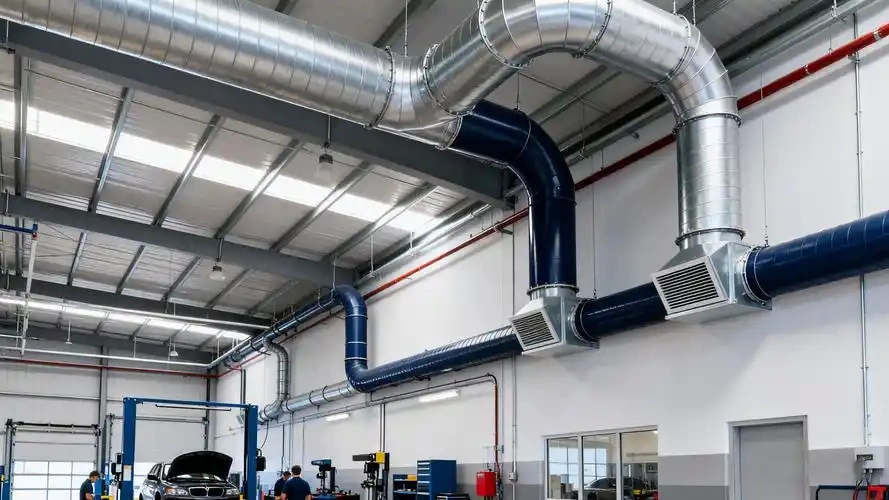
What Are Duct Support & Suspension Systems?
Duct support and suspension systems are standardized structural hardware used to suspend, fix, and reinforce HVAC ductwork. They transfer the dead load, wind load, and vibration load of duct pipelines to building floor slabs, beams, and steel structures, preventing free suspension and mechanical displacement of ventilation ducts.
Different from ordinary simple fixing parts, professional HVAC suspension systems follow strict spacing standards and load-bearing grades. They integrate static load support, vibration isolation, and seismic reinforcement functions, fully adapting to rectangular, round, spiral, and flexible ducts of all sizes. Widely used in ceiling concealed ducts, vertical duct risers, and large-span industrial duct runs, they are essential accessories for qualified HVAC engineering acceptance.
Common Types of Duct Support & Suspension Components
-
Saddle Duct Hangers Cradle-type structural design fits closely with round and spiral ducts, evenly bearing pipeline weight without squeezing or deforming the duct body. It effectively protects duct roundness, maintains stable airflow cross-section, and avoids local depression and turbulence. Ideal for medium and large-diameter round duct suspension.
-
Trapeze Supports Composed of channel steel, angle steel, and threaded rods, trapeze brackets feature super high load-bearing capacity. Suitable for large rectangular ducts, heavy insulated ductwork, and long-span industrial duct runs. They solve the problem of insufficient bearing capacity of single-point hanging and ensure overall flatness of long-distance ducts.
-
Perforated Strap Hangers Lightweight and adjustable in length, easy to cut and install on-site. Suitable for small-diameter round ducts, flexible ducts, and light-load residential and commercial ventilation systems. Flexible layout adapts to complex ceiling space conditions.
-
Rigid Fixed Brackets Used for vertical duct risers and wall-mounted duct fixation. They limit vertical and horizontal displacement of pipelines, prevent duct sliding and shaking, and improve the overall rigidity of vertical duct systems.
-
Vibration Isolation Suspension Kits Equipped with rubber or spring vibration isolators, they cut off vibration transmission between ducts and building structures. Effectively eliminate duct resonance noise and low-frequency structural noise, improving indoor environmental comfort.
-
Seismic Bracing Systems Including longitudinal and lateral seismic supports, meeting ASCE 7 and SMACNA seismic code requirements. Used for high-rise buildings, public facilities, and industrial plants to resist duct displacement and damage during earthquakes, ensuring building mechanical system safety.
Core Engineering Functions & Key Advantages
-
Prevent Duct Sagging & Deformation Standardized suspension spacing and graded load-bearing design support long-span duct runs uniformly. Avoid permanent deformation, bending, and sinking of pipelines caused by self-weight and wind pressure, keeping the duct system flat and orderly for long-term operation.
-
Stabilize Airflow & Reduce Energy Loss Deformed and sagged ducts cause airflow turbulence, increased wind resistance, and local pressure loss. Professional supports maintain standard duct cross-section and linearity, ensure stable wind speed and static pressure, reduce fan load, and lower long-term HVAC energy consumption.
-
Eliminate Vibration & Abnormal Noise Vibration isolation suspension structures effectively weaken fan vibration and airflow-induced duct resonance. Avoid friction collision between ducts and ceilings, walls, and pipelines, solving common problems of buzzing and shaking noise in ventilation systems.
-
Protect Duct Joints & Insulation Layers Uniform force-bearing support reduces tensile and shear stress at duct flanges and joints, preventing cracking, air leakage, and insulation layer peeling. Maintain high air tightness of the system and reduce maintenance frequency.
-
Meet International Code Compliance Fully compliant with SMACNA, IMC, ASCE 7, and Eurocode 8 installation standards. Standard suspension spacing and structural strength ensure project fire safety, seismic performance, and engineering acceptance qualification.
-
High Durability & Anti-Corrosion Performance All support components adopt hot-dip galvanized or stainless steel materials, featuring rust resistance, oxidation resistance, and strong environmental adaptability. Stable performance in humid, high-temperature, and long-term indoor environments with long service life.
-
Flexible & Efficient Installation Modular and standardized accessories support on-site rapid assembly and height adjustment. Adapt to various ceiling heights and complex pipeline layouts, greatly improving construction efficiency and reducing manual costs.
Standard Installation Spacing Guidelines (SMACNA & IMC)
Reasonable suspension spacing is the core of standardized construction. According to international HVAC duct construction codes:
-
Round Ducts: Maximum spacing 10ft (3m) for conventional diameters; closer spacing for large-diameter and insulated ducts.
-
Rectangular Ducts: Standard spacing 4ft–8ft (1.2m–2.4m), adjusted according to duct width and thickness.
-
Special Positions: Additional supports must be installed within 12 inches of elbows, tees, reducers, and duct joints to prevent local stress concentration.
-
Vertical Duct Risers: Fixed supports every 6ft–8ft to bear vertical load and prevent sliding.
Main Commercial & Industrial Application Scenarios
1. High-Rise Commercial Building HVAC Systems
Office buildings, shopping malls, hotels, and apartment buildings feature dense ceiling ducts and long-span horizontal pipeline layouts. Standard duct suspension systems ensure overall flatness of concealed ducts, prevent ceiling deformation and air leakage, and meet high-standard building comfort and safety requirements.
2. Large Public & Cultural Venues
Airports, exhibition halls, gymnasiums, and schools have large-area and long-distance ventilation duct runs. Heavy-duty trapeze supports and seismic bracing systems ensure stable operation of large-span ductwork and pass strict engineering safety inspections.
3. Industrial Plant Ventilation & Exhaust Systems
Factory dust removal, process exhaust, and high-temperature ventilation ducts are heavy in weight and harsh in working conditions. High-load anti-corrosion suspension supports adapt to industrial environments, resisting vibration and wind pressure to ensure 24/7 stable operation of industrial duct systems.
4. Cleanroom & Laboratory Projects
Dust-free workshops and medical clean rooms require extremely high system stability and air tightness. Precision suspension supports avoid duct vibration and displacement, prevent dust generation and joint air leakage, and maintain indoor cleanliness and stable air pressure.
5. Seismic & High-Standard Building Projects
For buildings in seismic zones and key public facilities, matched seismic duct suspension systems effectively resist seismic displacement, avoid duct falling and damage, and improve the overall disaster resistance of building mechanical systems.
6. Old HVAC System Renovation
A large number of old building ducts suffer from sagging, shaking, and noise problems. Upgrading standardized duct support and suspension systems is the most cost-effective renovation solution to quickly restore system stability and reduce failure rates.
Problems Caused by Unqualified Duct Suspension
-
Duct Sagging & Permanent Deformation: Irregular spacing causes pipeline bending and distorted airflow section
-
Severe Air Leakage & Energy Waste: Joint stress cracking leads to cooling/heating air loss
-
Obvious Vibration & Resonance Noise: Unisolated vibration generates persistent indoor noise
-
Insulation Layer Falling Off: Unstable support causes insulation failure and condensation loss
-
Hidden Safety Hazards: Loose fixation may lead to duct shaking or even falling under wind pressure or vibration
-
Project Acceptance Failure: Non-compliant suspension does not meet SMACNA and IMC code standards
Why Choose Our Duct Support & Suspension Systems?
-
Full Series Product Coverage: Saddle hangers, trapeze brackets, vibration isolation and seismic supports for all ducts
-
Strict Code Compliance: Designed and produced in accordance with SMACNA, IMC, ASCE international standards
-
High-Strength Anti-Corrosion Material: Hot-dip galvanized/stainless steel, durable and rust-proof
-
Graded Load-Bearing Design: Light, medium, and heavy-duty models for different duct sizes
-
Vibration & Seismic Dual Protection: Effectively reduce noise and improve system safety
-
Modular & Easy Installation: Save construction time and labor costs
-
Complete Export Documents: Support global project inspection and bulk export supply
Final Thoughts
Duct support and suspension systems are the invisible safety backbone of the entire HVAC ventilation system. Standardized suspension design and high-quality hardware accessories fundamentally solve common industry problems such as duct sagging, deformation, air leakage, vibration noise, and safety hazards. They ensure long-term stable, energy-saving, and low-noise operation of duct systems, and are indispensable core supporting components for high-quality commercial and industrial HVAC engineering.