
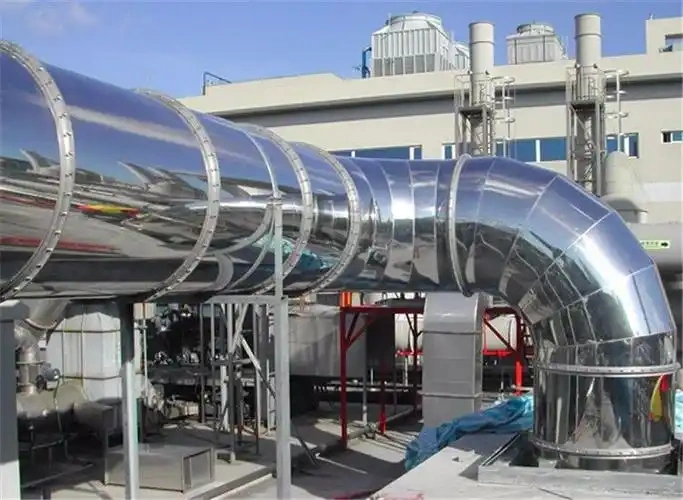
What Are Fireproof & Thermal Insulation Ducts?
Fireproof and thermal insulation ducts are professional composite duct systems composed of high-density fireproof insulation materials and reinforced outer protective layers. Different from traditional galvanized steel ducts, they are specially engineered to resist high temperatures, prevent flame spread, block heat transfer, and avoid condensation water formation inside HVAC systems.
These integrated ducts eliminate the need for secondary on-site insulation wrapping. They deliver stable fireproof performance, excellent thermal resistance, and high air tightness, fully meeting international building fire safety standards and HVAC energy-saving requirements.
Core Features & Technical Advantages
-
Excellent Fireproof & Flame Retardant Performance Made of high-grade non-combustible fireproof materials, the ducts achieve high fire resistance ratings. They effectively block flame penetration and prevent fire and smoke spreading through ventilation pipelines during fire accidents, protecting building safety and meeting strict fire code inspection standards.
-
Superior Thermal Insulation & Energy Saving The high-density insulation core greatly reduces heat transfer between duct air and external ambient temperature. It minimizes cooling and heating loss, improves HVAC temperature control efficiency, and significantly reduces long-term building energy consumption.
-
Condensation Prevention & Anti-Dew Performance Traditional uninsulated metal ducts easily produce condensation water in cooling systems, causing ceiling dampness, mildew, and water dripping. The integrated thermal insulation structure maintains stable surface temperature, completely avoiding condensation and protecting ceilings and interior decoration.
-
High Air Tightness & Low Air Leakage Integrated composite structure with sealed joints ensures ultra-low air leakage rate. It avoids cold/heat air loss and guarantees stable air volume and air pressure for HVAC ventilation systems.
-
Noise Reduction & Vibration Absorption The soft insulation core absorbs airflow friction noise and mechanical vibration generated by fan operation, effectively reducing indoor ventilation noise and improving indoor comfort.
-
Lightweight & Fast Installation Compared with traditional steel ducts with secondary insulation layers, integrated fireproof insulation ducts are lightweight and easy to cut and install. They greatly shorten construction cycles and reduce on-site labor costs.
-
Durable & Corrosion Resistant The composite material features anti-aging, anti-corrosion, and moisture-proof properties, adapting to humid, high-temperature, and harsh indoor environments with long service life and low maintenance rate.
Main HVAC & Construction Applications
Fireproof thermal insulation ducts are widely used in scenarios requiring fire safety compliance, energy saving, and condensation prevention, covering civil, commercial, and industrial fields:
1. Building Fire Smoke Exhaust Systems
High-rise buildings, shopping malls, hotels, hospitals, and subway stations require fire-resistant ducts for emergency smoke exhaust and fire isolation. Fireproof insulation ducts maintain structural stability under high-temperature flue gas, ensuring safe smoke exhaust and preventing fire spread.
2. Central Air Conditioning Supply & Return Air Systems
Ideal for concealed ceiling HVAC systems in commercial buildings. The thermal insulation layer effectively locks cold and heat energy, eliminates condensation dripping, and ensures efficient and stable air conditioning operation all year round.
3. Cleanroom & Laboratory Ventilation
Dust-free workshops, pharmaceutical cleanrooms, and laboratories demand stable temperature, humidity, and hygienic ventilation. Seamless insulation ducts avoid heat deviation and secondary pollution, meeting high-standard purification ventilation requirements.
4. Industrial Plant Ventilation & Exhaust
Factories with high-temperature equipment, oil fume, and dust pollution need fire-resistant ventilation pipelines. Fireproof insulation ducts prevent combustible gas and high-temperature airflow from causing fire hazards while reducing workshop energy loss.
5. Underground Parking Lot & Tunnel Ventilation
Underground spaces are humid and enclosed with strict fire safety requirements. Fireproof insulation ducts adapt to damp environments, prevent condensation corrosion, and ensure safe and stable exhaust and ventilation.
6. Public & High-End Commercial Projects
Exhibition halls, airports, stadiums, and office buildings pursue both safety and energy-saving performance. Integrated fireproof insulation ducts simplify construction, improve project grade, and pass official fire acceptance efficiently.
Why Fireproof & Insulation Ducts Are Indispensable for Modern HVAC Projects
-
100% Fire Code Compliance: Meet international building fire protection standards, avoiding project rejection and rework
-
Reduce HVAC Operational Costs: Minimize heat loss and save long-term electricity expenses
-
Protect Interior Decoration: Eliminate condensation water damage to ceilings and walls
-
Improve Indoor Comfort: Stabilize room temperature and reduce ventilation noise
-
Lower Maintenance Frequency: Anti-aging and corrosion-resistant structure extends duct service life
Why Choose Our Fireproof & Thermal Insulation Ducts?
-
High-Grade Fireproof Material: Non-combustible A1-class fireproof performance, reliable for fire emergency scenarios
-
Integrated Insulation Design: No secondary wrapping required, saving time and construction cost
-
High Air Tightness & Stable Performance: Strict sealing process to avoid air leakage and heat loss
-
Customized Solutions: Support custom size, thickness, and fire rating for different project demands
-
Full Certification Support: Complete test reports and export documents for global projects
-
Factory Direct Supply: Stable bulk production, competitive wholesale price, and fast delivery
Final Thoughts
Fireproof and thermal insulation ducts are dual-functional safety and energy-saving core components of modern HVAC systems. They solve multiple industry pain points including fire hazards, heat waste, condensation problems, and pipeline noise, becoming the standard configuration for high-quality building ventilation projects.