
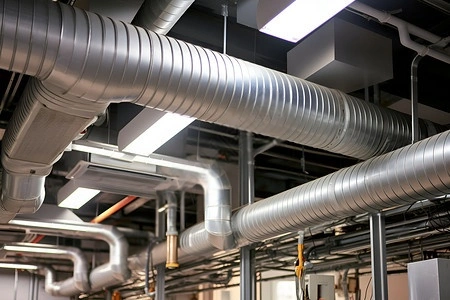
What Are HVAC Fasteners & Installation Accessories?
HVAC fasteners and installation accessories are specialized industrial hardware tailored for heating, ventilation, and air conditioning system assembly. Unlike ordinary construction fasteners, they feature anti-corrosion properties, vibration resistance, airtight sealing performance, and standardized load-bearing capacity, fully adapted to HVAC’s unique working conditions of frequent airflow impact, temperature cycling, and long-duration vibration.
These hardware components are widely used for duct splicing, equipment fixing, suspension assembly, gap sealing, vibration isolation, and system reinforcement. They comply with international HVAC installation standards such as SMACNA and IMC, ensuring overall system tightness, structural stability, and long operational lifespan for commercial, industrial, and residential ventilation projects.
Main Types & Core Functions
-
Self-Drilling & Self-Tapping Screws The most widely used HVAC fasteners for sheet metal duct connection, flange fixing, and equipment panel assembly. Equipped with drill-point ends and EPDM rubber washers, they realize one-time drilling and fastening without pre-drilling. They provide tight compression sealing, effectively preventing duct joint air leakage. Stainless steel and galvanized finishes deliver excellent rust resistance for humid ceiling and outdoor environments.
-
Blind Rivets & Solid Rivets Ideal for closed-space duct assembly and thin sheet metal connection. Rivets form uniform clamping force after installation, avoiding loosening caused by long-term fan vibration. They are commonly used for fixing duct reinforcements, access doors, and equipment casing panels, ensuring flat and firm duct surfaces.
-
Bolts, Nuts & Threaded Rod Fittings Core load-bearing hardware for duct trapeze supports, suspension systems, and heavy equipment fixing. High-strength galvanized and stainless steel bolts match various suspension assemblies, stably bearing duct dead weight and wind pressure load. Standard thread size ensures universal compatibility with global standard HVAC brackets.
-
Duct Clamps & Hose Clamps Including rigid duct clamps, flexible duct clamps, and heavy-duty T-bolt clamps. Used for connecting flexible ducts, ventilation hoses, and equipment interface pipelines. They provide uniform clamping force, prevent pipeline displacement and air leakage, and resist loosening caused by equipment vibration.
-
Sealing Gaskets, Tapes & Sealants Supporting airtight installation accessories for duct flanges and equipment joints. High-elasticity rubber gaskets and fire-resistant sealing tapes fill assembly gaps, improve system air tightness, and reduce cooling/heating energy loss. They also effectively block dust and moisture from entering the duct interior.
-
Vibration Isolation Pads & Rubber Mounts Special shock-absorbing accessories installed at the bottom of fans, air boxes, and suspension points. They isolate mechanical vibration transmission between equipment and building structures, eliminate low-frequency resonance noise, and protect duct joints from vibration fatigue damage.
-
Repair & Reinforcement Accessories Including duct repair patches, reinforcement strips, and locking pieces. Used for on-site duct damage repair, local reinforcement, and old system renovation. They help construction teams quickly fix minor defects and improve overall installation quality.
Key Engineering Advantages for HVAC Projects
-
Improve System Airtightness & Save Energy Matching fasteners and sealing accessories eliminate gaps at duct flanges, joints, and equipment interfaces. They effectively reduce air leakage rate, avoid cooling and heat energy waste, stabilize system airflow and static pressure, and lower long-term building operational energy consumption.
-
Anti-Vibration & Anti-Loosening Performance Professional vibration-resistant fasteners and rubber buffer accessories adapt to long-term fan operation and airflow impact. They prevent hardware loosening and duct displacement caused by vibration, ensuring long-term stable system operation and reducing abnormal noise.
-
Excellent Anti-Corrosion & Durability All hardware adopts hot-dip galvanized or stainless steel treatment, featuring strong rust and oxidation resistance. They adapt to humid ceilings, outdoor rooftop equipment, and industrial corrosive environments, avoiding failure caused by rust and extending system service life.
-
Standardized & Universal Compatibility All fastener specifications comply with international HVAC installation standards, perfectly matching standard ducts, dampers, silencers, and suspension brackets. They support modular assembly and reduce on-site matching difficulties.
-
Improve Construction Efficiency Integrated self-drilling design and pre-matched accessory kits simplify on-site construction procedures, reduce secondary processing, shorten project cycles, and lower labor costs for contractors.
-
Guarantee Project Acceptance Qualification Code-compliant installation hardware ensures system structural stability, air tightness, and safety performance, helping projects pass SMACNA and local building code inspections without compliance risks.
Typical HVAC & Building Application Scenarios
1. Commercial Building Central HVAC Systems
Widely used in office buildings, hotels, shopping malls, and apartment ceiling duct installation. Complete fastener and sealing accessory sets ensure tight splicing of concealed ducts, stable fixing of terminal equipment, and effectively eliminate air leakage and vibration noise, meeting high-comfort commercial building operation standards.
2. Industrial Plant Ventilation & Exhaust Systems
Industrial dust removal, process exhaust, and high-temperature ventilation systems require high-strength, anti-corrosion hardware. Vibration-resistant bolts, reinforced clamps, and anti-rust fasteners adapt to harsh industrial environments, ensuring 24-hour stable operation of heavy-load duct systems.
3. Cleanroom & Laboratory Ventilation Projects
Dust-free workshops and medical clean rooms have extremely strict requirements for system air tightness and stability. High-precision sealing accessories and non-loosening fasteners avoid air leakage and dust accumulation, stabilize indoor air pressure and cleanliness, and meet high-standard purification engineering demands.
4. Rooftop & Outdoor HVAC Units
Outdoor units face wind, rain, and temperature alternation. Stainless steel fasteners and weather-resistant sealing accessories effectively resist corrosion and aging, preventing hardware failure and system loosening caused by harsh outdoor weather.
5. Old HVAC System Renovation & Maintenance
A large number of old systems suffer from loose joints, rusted fasteners, and air leakage. Replacing outdated hardware with new standard fasteners and sealing accessories is a low-cost and efficient renovation solution to restore system stability and energy-saving performance.
Common Risks of Low-Quality Installation Hardware
-
Persistent Duct Air Leakage: Poor sealing and loose fastening lead to serious energy waste
-
Vibration & Abnormal Noise: Ordinary fasteners loosen easily, causing duct resonance and buzzing noise
-
Rust & Structural Failure: Low-grade hardware corrodes rapidly, affecting overall duct stability
-
Unstable Air Volume & Pressure: Loose joints disrupt airflow balance and reduce HVAC efficiency
-
Frequent Maintenance & High Costs: Short service life leads to repeated repairs and replacements
-
Project Non-Compliance: Substandard hardware fails international HVAC code acceptance
Why Choose Our HVAC Fasteners & Installation Accessories?
-
Full-Spec Product Coverage: Complete screws, rivets, bolts, clamps, seals and vibration isolation accessories
-
Premium Anti-Corrosion Materials: Galvanized steel and stainless steel options for long durability
-
Vibration-Proof & Tight Sealing: Effectively solve loosening and air leakage pain points
-
International Standard Compliance: Meet SMACNA and IMC HVAC installation codes
-
Universal & Easy Installation: Perfect match with mainstream global HVAC duct systems
-
Bulk Export Support: Stable batch supply and complete certification documents
Final Thoughts
Fasteners and installation accessories are the invisible guarantee of HVAC system quality and longevity. Small but essential, standardized high-quality installation hardware eliminates air leakage, vibration noise, rust failure, and structural instability, ensuring energy-saving, quiet, and long-term stable operation of ventilation and air conditioning systems. For global HVAC engineering projects and long-term equipment maintenance, reliable full-set installation accessories are the most cost-effective investment to improve overall project quality.