
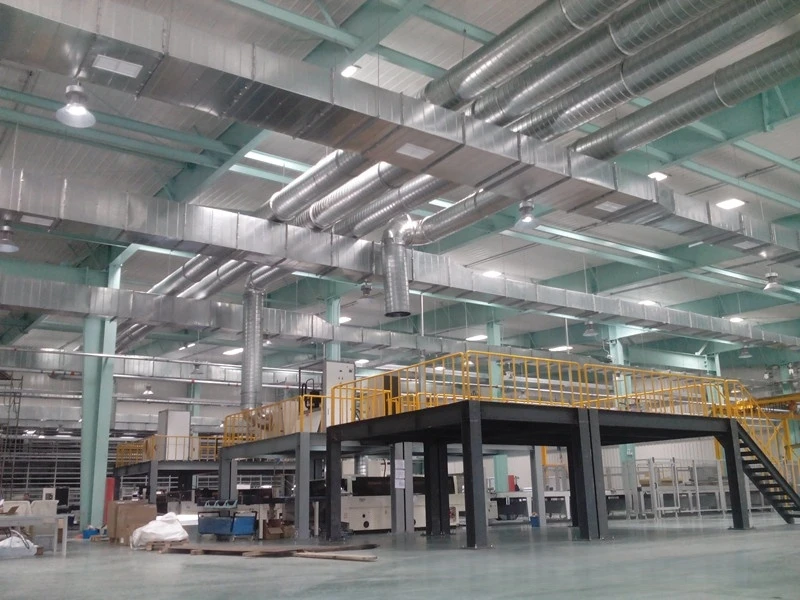
What Is PVC Flexible Duct?
PVC flexible duct is a lightweight, bendable ventilation pipe constructed with high-strength PVC film and embedded spiral steel wire support. Unlike aluminum flexible ducts and insulated ducts, PVC duct focuses on basic air conveyance, flexibility, and economic efficiency. It features soft texture, arbitrary bending, stretchability, and collapse resistance, making it ideal for ordinary air supply, exhaust, and heat dissipation systems.
Available in transparent and opaque styles, PVC flexible ducts are widely used in non-high-temperature, conventional ventilation environments. With good air tightness, waterproof, and dust-proof performance, it has become the mainstream general-purpose flexible duct in the global HVAC accessory market.
Core Features & Technical Advantages
-
Ultra-Lightweight & Super Flexible PVC flexible duct is extremely lightweight and easy to bend, twist, and stretch freely. It can bypass ceiling beams, wall pipelines, and complex structural obstacles that rigid ducts cannot handle, greatly improving on-site layout flexibility and construction efficiency.
-
Excellent Air Tightness & Dust Proof Integrated PVC film structure with tight spiral wire fitting ensures no air leakage. It effectively prevents air loss, dust infiltration, and wind pressure attenuation, maintaining stable air volume for ventilation and exhaust systems.
-
Cost-Effective & Economical Compared with aluminum foil ducts and insulated flexible ducts, PVC flexible ducts have lower material costs with stable basic performance. It is the most budget-friendly solution for large-scale conventional ventilation projects and bulk wholesale procurement.
-
Waterproof, Moisture-Proof & Corrosion Resistant PVC material features excellent water resistance, moisture resistance, and chemical corrosion resistance. It does not absorb water, rot, or rust, adapting to humid ceilings, basements, and indoor damp environments for long-term stable operation.
-
Easy Cutting & Fast Installation The soft tubular structure allows manual cutting to any required length without professional tools. It supports quick docking with fans, vents, and duct fittings, saving massive labor and construction time.
-
Good Toughness & Deformation Resistance Reinforced spiral steel wire support prevents duct collapse, flattening, and deformation under normal negative pressure. It maintains smooth pipeline circulation and ensures continuous ventilation efficiency.
-
Low Noise Ventilation The soft PVC material buffers airflow friction and vibration, reducing ventilation noise during system operation, creating a quieter indoor air environment.
Main HVAC & Industrial Application Scenarios
PVC flexible ducts are widely used in conventional ventilation scenarios that do not require high temperature resistance and thermal insulation, covering residential, commercial, and light industrial fields:
1. Residential Fresh Air & Ventilation Systems
Perfect for household fresh air units, bedroom ventilation, bathroom exhaust, and kitchen auxiliary exhaust. Its flexible layout adapts to complex home ceiling and wall piping, realizing efficient indoor air circulation at low cost.
2. Commercial Building Conventional Ventilation
Suitable for office buildings, shopping malls, and supermarket basic air exchange, equipment room heat dissipation, and local exhaust ventilation. It meets large-area basic ventilation demands and reduces overall project material costs.
3. Light Industrial Dust & Fume Exhaust
Ideal for small workshop dust removal, equipment heat dissipation, ordinary oil fume exhaust, and mechanical ventilation. The good flexibility facilitates mobile and local air suction layout for production equipment.
4. HVAC Terminal Transition Connection
Used for short-distance transitional connection between main ducts and air outlets, solving installation position deviation and docking difficulties. It complements rigid duct systems to make pipeline layout more reasonable.
5. Basement & Underground Space Ventilation
Basements and enclosed spaces are humid and require frequent air exchange. PVC duct’s waterproof and moisture-proof properties prevent mold and pipeline damage, ensuring long-term stable ventilation.
6. Temporary Engineering Ventilation
Perfect for construction site temporary ventilation, equipment temporary heat dissipation, and short-term project air exchange. It is low-cost, easy to install and disassemble, and highly reusable.
PVC Flexible Duct vs Aluminum Flexible Duct
-
PVC Flexible Duct: Low cost, waterproof, flexible,best for normal-temperature conventional ventilation, large-batch civilian and commercial projects.
-
Aluminum Flexible Duct: High temperature resistant, fireproof, suitable for high-temperature exhaust and high-standard HVAC systems.
Conclusion: PVC flexible duct is the optimal choice for cost-sensitive, normal-temperature general ventilation projects.
Why Choose Our PVC Flexible Ducts?
-
High-Quality PVC Raw Material: High toughness, anti-aging, not easy to crack or leak air
-
Reinforced Spiral Wire: Uniform support, anti-collapse, stable ventilation shape
-
Tight Seam Technology: Zero air leakage, stable wind pressure and air volume
-
Multiple Specifications: Complete diameter and length options, support custom processing
-
Stable Export Quality: Strict quality inspection, compliant with international ventilation accessory standards
Final Thoughts
PVC flexible duct is the most practical and economical basic accessory in modern HVAC and ventilation industries. With outstanding flexibility, air tightness, and moisture-proof performance, it solves various on-site layout difficulties for conventional ventilation projects, helping contractors reduce engineering costs and improve construction efficiency.